
Practical Trading
Speaker(s): Georgi Melkonyan
500000 AMD
Included lessons: 1
About live session
About the Course
This course is designed for participants who already have a foundational understanding of financial markets and want to develop practical skills in technical analysis while building a more systematic approach to trading decisions.
Throughout the course, you will study the core principles and tools of technical analysis, learn how to identify market trends, work with different timeframes, recognize chart patterns, and apply widely used technical indicators and mathematical metrics to assess market behavior.
Particular emphasis will be placed on the logic behind building trading strategies. The instructor will present practical strategies based on combinations of technical analysis tools and demonstrate how they can be applied in real market conditions.
What you'll learn
What You Will Learn
From the fundamentals of technical analysis to developing trading strategies and applying them in practice.
• Overview of technical analysis tools and trading platforms
• Key principles and approaches to market technical analysis
• Methods for identifying and confirming trends
• Working with different timeframes and their importance for various trading strategies
• How to identify and interpret chart patterns
• Using chart patterns to assess potential price movements
• Examples of simple and effective technical indicators
• Combining indicators and oscillators to strengthen trading signals
• Practical application of strategies across different asset classes
• Rules for entering and exiting trades
• Risk management
• Case study analysis, identifying and correcting common mistakes
• Individual assignments and group practical exercises
• Summarizing the course and consolidating key knowledge
• Recommendations for further education and professional development in the field of investing
Included lessons
Upcoming sessionSpeaker(s):
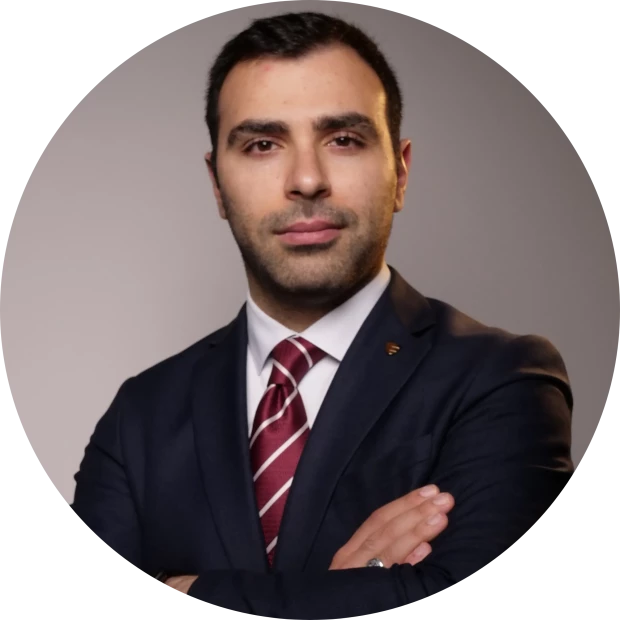
Georgi Melkonyan
- Holds a PhD in Economics, specializing in Finance and Accounting.
- Has over eight years of experience in macroeconomic and investment analysis.
- Author of more than 40 academic and analytical publications covering investment strategies, pension systems, and financial market regulation.
- Recognized expert in pension investments, specializing in the management of funded pension assets.
- Has been invited as an expert by government institutions, as well as international and private organizations.
- Has served as a guest lecturer at leading universities in Armenia and abroad, addressing contemporary economic and investment issues.
- Author of several educational programs on securities markets designed for both beginner and professional investors.
- An independent investor in the U.S. stock market, achieving consistent returns through his own investment strategies.
- Actively contributes to the promotion of financial literacy through analytical articles, public speaking engagements, and educational initiatives.